
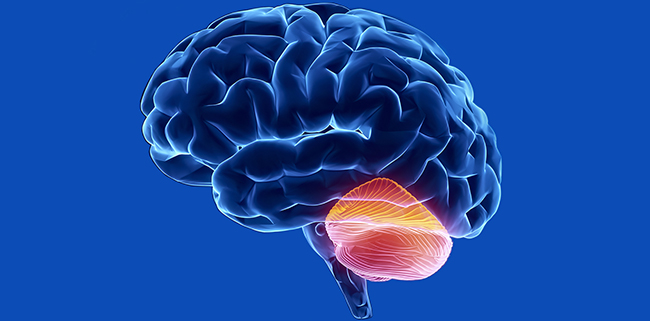
Most people think the cerebellum only controls balance and coordination, but modern neuroscience shows it does far more.
The cerebellum also helps regulate attention, learning, stress responses, emotional processing, and how the brain interprets information coming from the body.
The Brain’s Adaptation and Coordination Centre
The cerebellum is often described as the brain’s coordination centre, but modern neuroscience now shows it does far more than simply help with balance and movement. The cerebellum helps the brain predict what the body should feel like, organise efficient movement, regulate posture and muscle tone, adapt to changing environments, and fine tune how we interact with the world around us.
The cerebellum helps the brain predict what the body should feel like
Prediction, Learning, and Efficiency
One of the cerebellum’s most important jobs is prediction.It compares what the brain expects to happen with what is actually happening in the body. When this doesn’t match, the cerebellum helps the brain adapt and improve its internal predictions.
This is how we learn new movements, improve coordination, develop skilled motor control, and adapt to physical stress and changing demands. The cerebellum is deeply involved in movement efficiency, reaction time, timing, precision, and motor learning.
Modern neuroscience also shows the cerebellum helps regulate attention, stress responses, emotional processing, and cognitive performance. Rather than functioning in isolation, it communicates with many important brain regions involved in movement, awareness, behaviour, and adaptation.
The Spine – Brain Connection
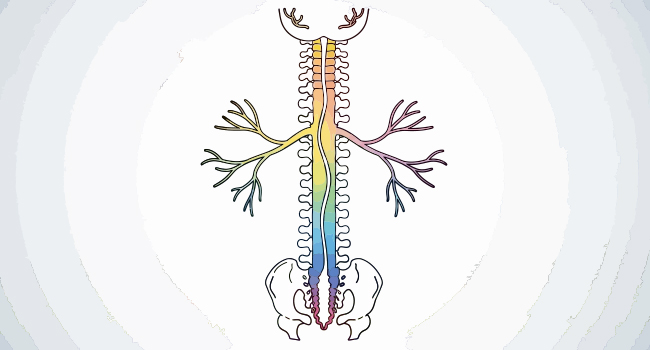
The spine plays an important role in supplying the brain with information used by the cerebellum.
Small muscles around the spine contain large numbers of sensory receptors that inform the brain about posture, movement, balance, and spinal position. This information helps the cerebellum determine how the body is functioning and how movements should be organised.
The Cerebellum and Pain
The cerebellum also plays a role in how the brain interprets discomfort and physical stress. Modern neuroscience now shows that pain is not simply a direct signal coming from injured tissues to the brain. Instead, the brain actively interprets information coming from the body and decides how much protection is needed. Because the cerebellum helps regulate prediction, attention, emotional processing, and sensory integration, it can influence how strongly pain is experienced and how easily the nervous system settles again afterwards. This helps explain why stress, tension, fatigue, sleep, fear, and previous experiences can all influence spinal pain and recovery.
Chiropractic and the Cerebellum
Research shows that chiropractic adjustments can alter cerebellar activity and change how the cerebellum communicates with movement and sensory regions of the brain. Following chiropractic adjustments, studies have reported changes consistent with improved brain-body communication, movement control, and neural processing efficiency.
Chiropractic care may not simply affect joints and muscles. It may also help the brain receive clearer, more accurate information from the spine
Why This Matters?
The cerebellum is highly adaptable throughout life. Improving the information reaching the brain may help support healthier movement, coordination, and nervous system function. This is one reason many people choose to have their spine checked and adjusted regularly — not simply because of pain, but because spinal function influences how the brain perceives and coordinates the body.
The spine and the brain always communicate together. The cerebellum is one of the key centres helping make sense of that conversation.
References
- Diedrichsen, et al. 2019. Neuron, 102(5), pp.918-928.
- Li, et al. 2024. Journal of Neuroscience Apr 24;44(17).
- Baarbé et al. 2018. PLOS ONE 13(2): e0193413.
- Daligadu, et al. 2013. JMPT 36, no. 8: 527-537.
Acknowledgments
- Dr. Heidi Haavik – BSc(Physiol) BSc(Chiro) PhD
- Dr. Kelly Holt – BSc, BSc(Chiro), PGDipHSc, PhD
- Dr. Jenna Duehr – BChiro, BHSC (Nursing), MHSc